
Parktown, Johannesburg, Gauteng, South Africa. GPS 26.179142°S 28.039186°E
+++

For a short introduction to Nelson Mandela Children’s Hospital listen to this child-friendly experimental AI-generated podcast.
+++
“The Nelson Mandela Children’s Hospital is an initiative as ambitious as Madiba himself.“
Nelson Mandela Children’s Hospital1
+++
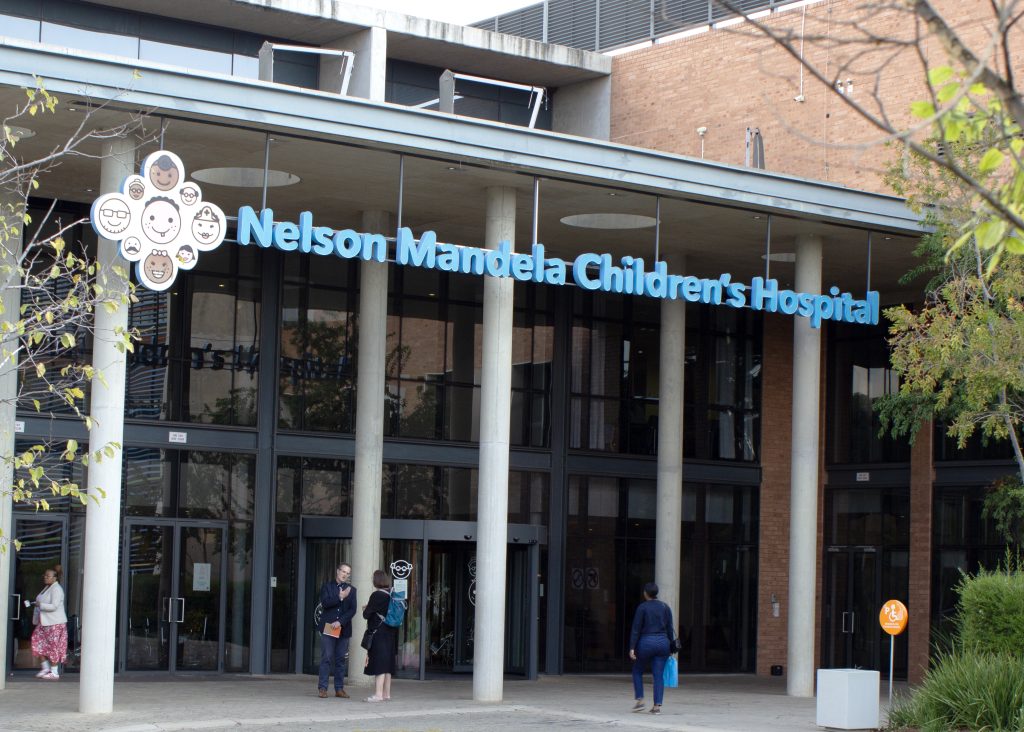
In the heart of Johannesburg, the Nelson Mandela Children’s Hospital stands as a testament to Mandela’s vision for specialised paediatric healthcare. His dream began when he donated one-third of his presidential salary to establish the Nelson Mandela Children’s Fund, which later initiated fundraising for the hospital.1 The hospital was built through a global campaign, with the South African government covering operational costs to ensure long-term sustainability.2 As one of Africa’s few tertiary and quaternary paediatric hospitals, it upholds Mandela’s commitment to healthcare equity by ensuring no child is turned away due to financial constraints.1,2
The hospital is a 220-bed dedicated paediatric hospital, the second in South Africa and the fifth in Africa. Patients from across the country and neighbouring countries are referred to the hospital for specialised care, ensuring that support is accessible to children in their time of need. Beyond medical care, the hospital is a paediatric research and training centre, partnering with the University of the Witwatersrand Medical School to train healthcare professionals.3 Research highlights its impact on paediatric healthcare innovation, particularly in managing complex childhood diseases and reducing child mortality rates by improving access to specialised treatment.4
The hospital integrates paediatric healthcare with child-friendly design, using playfulness, bold colours, and natural light to create a comforting environment. The architectural and environmental design draws inspiration from the natural beauty of South Africa and the African continent, blending modern lines with bold accents and textures.1 The hospital’s logo, symbolising Ubuntu, represents compassion, humanity, and care.5 This theme is seamlessly embedded into the hospital’s architectural design, reinforcing the brand’s core values with repetitive window patterns. To make navigation easier for children and caregivers, the hospital features an inclusive wayfinding system using bold typography, illustrated characters, icons, and colour-coded signage.6
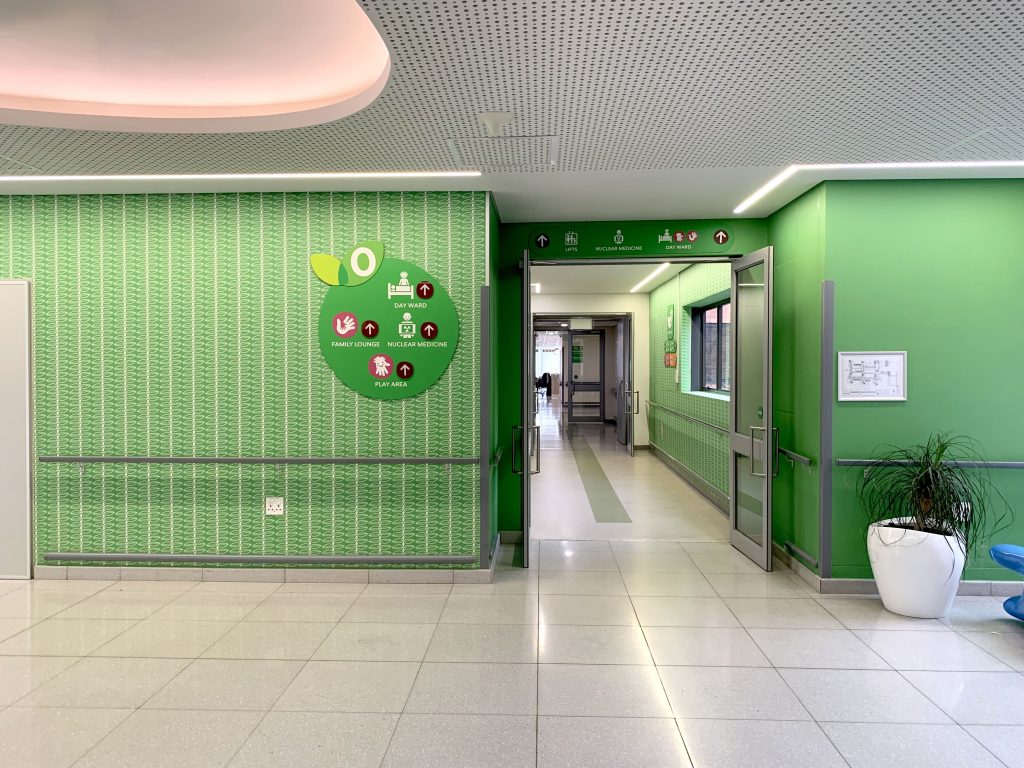
Clinical spaces are transformed through vibrant murals, such as a sonar room that becomes a magical starry night sky when the lights are off. The hospital also boasts an extensive art collection, including the Mandela Poster Project, while waiting areas and play spaces feature custom-designed interactive furniture, courtyards, tactile installations, and sensory play panels.2 Warm reception areas, family lounges, gardens, and play areas enhance the healing experience.
The hospital remains a beacon of hope and excellence in paediatric healthcare, continuing Mandela’s legacy of ensuring quality medical care for all children, regardless of their circumstances.1 The sustainability of the hospital requires partnerships with the Government, the private sector, civil society and philanthropy. Every child deserves an opportunity to live and thrive.
+++
From the Archive at the Centre of Memory (ACoM)
Item code: ZA COM NMG-1000
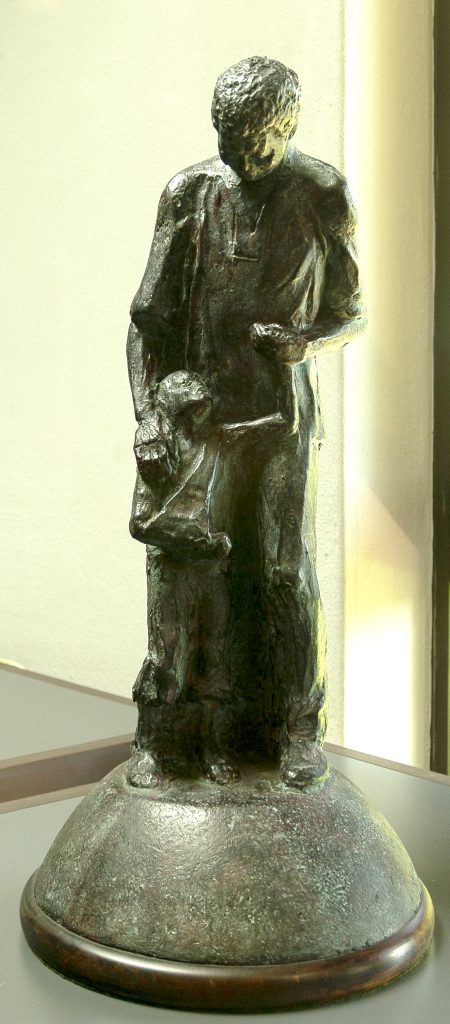
Title: Statue of Nelson Mandela with the child with the broken arm
Description: Statue of Nelson Mandela with the child with a broken arm, designed by artist Kurt Lossgott in 2001.
Medium: Statuette
Other items related to Nelson Mandela Children’s Hospital in ACoM
1) ZA COM NMFPC-0166: Nelson Mandela Children’s Hospital Dedication Ceremony on 31 July 2009.
2) ZA COM MR-T-7-3-1999: Mandela Poster Project Collective was initiated by a group of South Africa designers to celebrate Nelson Mandela’s life by collecting 95 exceptional posters from around the world, honouring his lifelong contribution to humanity. This collective is now part of the permanent art exhibition of the hospital.
+ + +
Acknowledgements
The project team sincerely thank the Nelson Mandela Children’s Hospital for the invitation to document the hospital as part of this project. This allowed the opportunity to explore and highlight the hospital’s role in preserving Nelson Mandela’s legacy. The hospital team’s support and collaboration in this endeavour. is appreciated.
References
1. Nelson Mandela Children’s Hospital (2024). Official Website. Available at: https://www.nelsonmandelachildrenshospital.org/ [Accessed: 17 February 2025].
2. Mott Foundation (2016). Nelson Mandela Children’s Hospital Completed in Johannesburg. Available at: https://www.mott.org/news/articles/nelson-mandela-childrens-hospital-completed-in-johannesburg [Accessed: 17 February 2025].
3. ArchDaily (2017). Nelson Mandela Children’s Hospital, Johannesburg, South Africa. Available at: https://www.archdaily.com/870774/nelson-mandela-childrens-hospital [Accessed: 17 February 2025].
4. Bhoojedhur, J. and Kruger, D. (2017). Addressing childhood mortality rates: The impact of NMCH on specialised paediatric care in Southern Africa, South African Journal of Child Health, 11(1), pp. 18-25. Available at: https://www.scielo.org.za/scielo.php?pid=S1999-76712017000100002&script=sci_arttext [Accessed: 17 February 2025].
5. Vega School (2017). Vega students pay tribute to Nelson Mandela through children’s hospital. Available at: https://www.bizcommunity.com/Article/196/422/160216.html [Accessed: 17 February 2025].
6. GreenInc (n.d.). Nelson Mandela Children’s Hospital. Available at: https://www.greeninc.co.za/nmch [Accessed: 17 February 2025].
Photography © 2024 Robert Harland and Yolandi Burger